


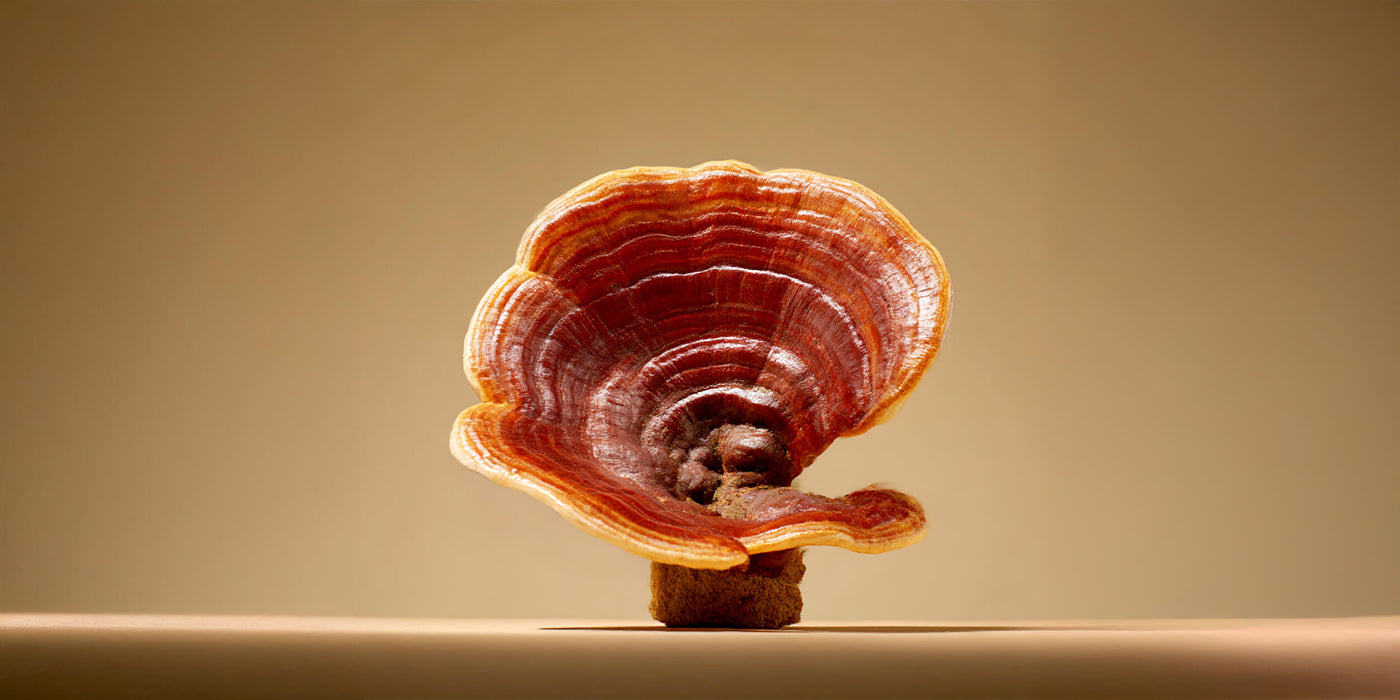

ESSENTIAL NOTES FROM THE “KING OF MUSHROOMS”
Reishi is one of the most extensively researched functional mushrooms, with more than 5,000 scientific publications exploring its unique history and active bioactive compounds. Its high concentration of standardised bioactives drives the functional properties of Reishi—most notably specific polysaccharides such as beta-glucans (specifically β-(1,3/1,6)-D-glucans), triterpenes, and peptidoglycans. These compounds have been meticulously researched for over 20 years by our R&D department to ensure optimal concentration and bioavailability. Traditionally, Reishi has long been valued for its role in maintaining daily physical and mental balance.
Key Bioactive Properties & Focus Areas
- Inner Balance: Traditionally used to support daily resilience, calm, and overall psychological wellbeing.
- Cellular Protection: Rich in natural triterpenes and polyphenols that contribute to cellular balance and daily vitality against everyday environmental stressors.
- Standardized Bioavailability: Formulated with precise percentages of active compounds to ensure consistent quality and maximum absorption with every dose.
In addition, over the last decade alone, scientific databases such as PubMed has indexed more than 1,400 studies on Reishi, highlighting the rapidly growing scientific interest in Ganoderma lucidum and its bioactive profile.
Products with Reishi
-

 TRENDINGTOP SELLERSHasta - 10 %
HIFAS-Equilibrium (Reishi, Lion’s Mane, Cordyceps) capsules
BALANCE & WELLBEING
From 42,50 €Unit price /Unavailable -

 TOP SELLERSHasta - 10 %
Hifas-Menopause (Reishi, Cordyceps, Lion's Mane, Ashwagandha and Green Tea extract) capsules
MENOPAUSE BALANCE SUPPORT
From 42,50 €Unit price /Unavailable -

 TOP SELLERSHasta - 10 %
 -

 TRENDINGHasta - 10 %
Dr. Immune Five Syrup (Reishi, Agaricus, Oyster, Chaga, Shiitake)
CHILDREN'S IMMUNE SYSTEMS SUPPORT
From 30,00 €Unit price /Unavailable


REISHI PROPERTIES< APPLICATIONS AND USES
The growing scientific interest in Reishi and its unique bioactive profile is well documented, as is the case with other functional species such as Shiitake, Cordyceps, and Lion's Mane. Reishi has a rich history dating back to the 2nd millennium BC, when it was revered by ancient emperors as a prized symbol of vitality and longevity. Historically reserved exclusively for royalty, it remains one of the most celebrated botanicals in traditional Eastern wellness traditions.
Reishi became a major focus of modern fungal science in the 1950s, with pioneering research led primarily in Asia. While traditional methods involved drinking hot water decoctions or infusions, modern formulation science allows for far greater precision and bioavailability.
Advanced Extraction & Daily Supplementation
To maximise the concentration and absorption of its active bioactives, highly concentrated standardised extracts are used. Reishi can be enjoyed as a pure single-extract supplement (Mico-Rei) or blended synergistically across targeted functional formulas such as Mico-Mix, Mico-Five, HIFAS-Equilibrium, HIFAS-Menopause, HIFAS-Microbiota, Hifas-Intima Oral, and Papilozumb—all designed as high-potency nutraceuticals in convenient capsule form.
For children, targeted liquid extracts are formulated for gentle daily support, including Dr. Immune Five and Dr. GB. Highly concentrated fungal extracts like these form the foundation of most modern research regarding active fungal compounds.
In addition, organic Reishi mushroom powder can be easily added to smoothies, hot drinks, and daily recipes (Reishi Antiox). As an innovative botanical ingredient, Reishi is also formulated into topicals and natural cosmetics—from nourishing soaps and creams to specialised intimate care products such as Hifas-Intima Gel.
FEATURED BIOMOLECULES
Among the more than 400 active biomolecules in this fungus are:


The culture of the Reishi
Reishi grows wild in deciduous forests—particularly on oak and beech trees—as well as in coniferous woodland. Both the shape and colour of Reishi can vary significantly, and it can easily be mistaken for other bracket fungi belonging to the same genus. Naturally occurring across Southeast Asia, Europe, and North America, most Reishi is now sustainably cultivated to meet growing global demand.
Traditional cultivation methods utilize natural hardwood logs or substrate bags containing sawdust. While log cultivation is one of the most traditional techniques, widespread scientific interest in the bioactive compounds of this fungus has driven the development and optimisation of advanced, high-yield biotechnology systems to ensure purity, standardisation, and optimal bioactive potency.